
How to Use Oopbuy Spreadsheet for High-Profit Dropshipping Product Selection
Oopbuy Spreadsheet simplifies product research by organizing data, analyzing trends, and identifying high-profit opportunities efficiently. Master e-commerce growth using Oopbuy Spreadsheet for smarter product sourcing, competitor analysis, and market validation.
6/25/20262 min read
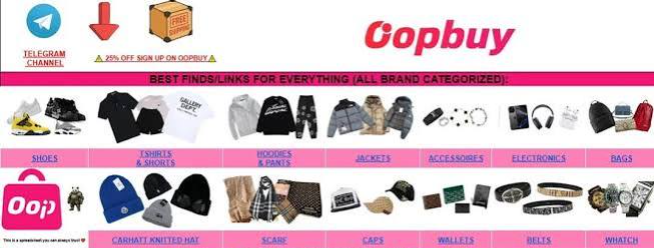
How to Use Oopbuy Spreadsheet for High-Profit Dropshipping Product Selection (2026 Guide)
In the competitive world of dropshipping, success is no longer about guessing trending products—it’s about making data-driven decisions. One of the emerging tools helping sellers streamline product research is the Oopbuy Spreadsheet, a structured system designed for analyzing suppliers, tracking product performance, and identifying high-margin opportunities.
This guide explains how to use the Oopbuy Spreadsheet effectively to discover high-profit dropshipping products and scale your e-commerce business with precision.
What Is the Oopbuy Spreadsheet?
The Oopbuy Spreadsheet is a product research and sourcing framework used by dropshippers to organize supplier data, compare product costs, and evaluate market demand. Instead of manually switching between platforms, sellers consolidate everything into a single system for faster decision-making.
Its core purpose is simple:
turn raw product data into profitable product selections.
Why the Oopbuy Spreadsheet Matters for Dropshipping
Successful dropshipping depends on three key factors:
Product demand
Supplier cost
Profit margin
The Oopbuy Spreadsheet helps unify these variables so sellers can instantly identify whether a product is worth selling. This reduces risk and eliminates emotional decision-making.
Key benefits include:
Faster product validation
Better supplier comparison
Clear profit margin calculations
Reduced testing costs
Improved scaling efficiency
Step-by-Step: How to Use Oopbuy Spreadsheet for Product Selection
1. Import Product Data from Suppliers
Start by collecting product listings from suppliers or sourcing platforms. Enter the following into the spreadsheet:
Product name
Supplier price
Shipping cost
Product category
Estimated delivery time
This creates a structured database for analysis.
2. Analyze Market Demand
Next, evaluate whether the product has real demand. You can track:
Social media trends
Google search volume
Marketplace rankings
Competitor listings
In the spreadsheet, assign a demand score (e.g., 1–10) to prioritize high-interest products.
3. Calculate Profit Margins Automatically
One of the most powerful uses of the Oopbuy Spreadsheet is automated margin calculation.
Formula example:
Profit = Selling Price – (Product Cost + Shipping + Fees)
Focus on products with:
At least 30% profit margin
Low fulfillment cost
Stable shipping rates
This ensures sustainable long-term scaling.
4. Evaluate Competition Level
High demand alone is not enough. You must assess competition:
Number of active sellers
Ad saturation on platforms like TikTok or Meta
Product differentiation potential
Label competition levels in the spreadsheet as:
Low
Medium
High
Prioritize low-to-medium competition products for faster entry.
5. Score and Rank Products
To simplify decision-making, assign each product a total score based on:
Demand (30%)
Profit margin (40%)
Competition (20%)
Shipping efficiency (10%)
Sort the spreadsheet by total score to instantly identify winning products.
6. Test Small Before Scaling
Once you select a product:
Launch small ad campaigns
Test multiple creatives
Track conversion rate
Record results in the spreadsheet
This turns your Oopbuy system into a feedback loop for continuous improvement.
Advanced Strategy: Building a Winning Product Pipeline
Top dropshippers don’t rely on single-product success. They build pipelines.
Use your Oopbuy Spreadsheet to:
Track multiple product ideas weekly
Compare historical performance
Identify seasonal trends
Remove underperforming items quickly
Over time, this creates a data-driven product ecosystem.
Common Mistakes to Avoid
Even with a powerful tool, many beginners fail due to poor execution:
Ignoring shipping time impact on conversion rates
Choosing products based only on trends
Not updating spreadsheet data regularly
Overestimating profit margins
Scaling too quickly without testing
Avoiding these mistakes significantly increases your success rate.
Final Thoughts
The Oopbuy Spreadsheet is more than just an organizational tool—it’s a strategic system for building a profitable dropshipping business. By combining structured data, demand analysis, and profit tracking, sellers can move from guesswork to precision-based product selection.
If used consistently, it becomes a powerful engine for discovering winning products, minimizing risk, and scaling e-commerce operations efficiently.